PM Modi Marks 12 years of Continuous Governance
The Modi Era: India’s Longest-Serving Prime Minister
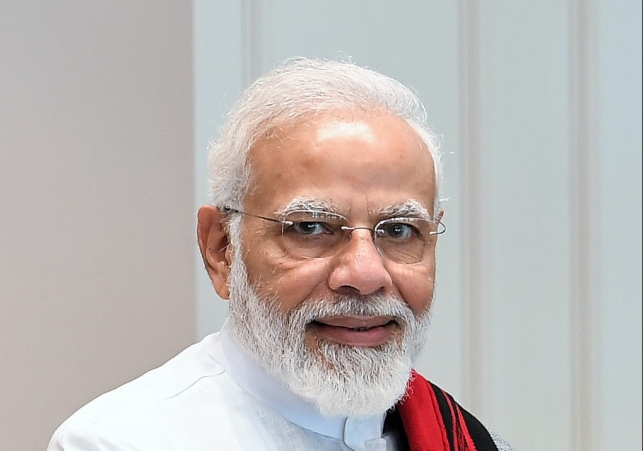
Prime Minister Narendra Modi: A significant milestone has been reached in the history of modern Indian politics. Narendra Modi has officially become India’s longest continuously serving Prime Minister. Since taking office in May 2014, his tenure has been characterized by major policy shifts, structural changes, an emphasis on national security, and an altered geopolitical footprint for India. The milestone reflects his sustained electoral mandates and marks a distinct period of governance that continues to shape the nation’s political and administrative landscape.
The achievement of this milestone drew a wide range of responses from both international diplomatic circles and domestic political figures, reflecting the administration’s broader geopolitical positioning.
Highlighting India’s current diplomatic relations, several international leaders extended formal acknowledgments:
- U.S. President Donald Trump noted the PM’s tenure by emphasizing the ongoing strategic alliance and economic partnerships between the USA and India.
- Israeli Prime Minister Benjamin Netanyahu acknowledged the milestone, describing the PM as a key diplomatic partner and highlighting bilateral cooperation in regional stability and technological innovations.
- Sri Lankan President Anura Kumara Dissanayake, congratulated the prime minister on behalf of the people of Sri Lanka through a letter.
- An official statement issued by the PM’s office stated that James Marape, the Prime Minister of Papua New Guinea, used a personal video to communicate his heartfelt congratulations saying the PM was a “role model and an example of leadership.”
- Prime Minister of Trinidad and Tobago Kamla Persad-Bissessar sent his best wishes saying India has evolved under the PM.
Key Policy Initiatives and Infrastructure Milestones
The administration’s tenure has been defined by policy shifts across national defense, infrastructural management, and domestic administration:
- National Security and Defense Doctrine: The defense strategy under this tenure shifted toward documented cross-border operations, including Uri military action in 2016 and the Balakot air strikes in 2019. Following the civilian security incidents in Pahalgam in 2025, execution of Operation Sindoor marked an ongoing policy framework focused on counter-terrorism at point of origin.
- Infrastructure Development Projects: In transport infrastructure, the administration oversaw the introduction of the domestically produced Vande Bharat semi-high-speed trains alongside the expanded construction of national expressways, civil aviation airports, and digital connectivity networks.
- Digital Administration and Welfare Distribution: The integration of biometric identity systems (Aadhaar) with direct banking infrastructure was utilized to manage central welfare programs. This logistical framework is used to distribute direct-benefit resources, including subsidized rations, housing allocations via the PM Awas Yojana, and healthcare access under Ayushman Bharat.
- Legislative and Cultural Milestones: Key political and constitutional events during this period include the abrogation of Article 370 regarding the special status of Jammu & Kashmir, as well as the legal resolution and subsequent construction of the Ram Mandir in Ayodhya—both of which represent core domestic milestones for the administration's support base.
From the Grassroots: Life Before the PMO
The administrative approach and political career of Narendra Modi were shaped through a sequence of early roles and regional governance milestones:
- Early Life and Background:
Born into a lower-middle-class family in Vadnagar, his early life included assisting with his family's small-scale tea-selling business at the local railway station, an experience frequently cited in discussions of his working-class background. - Organizational Work and the 1975 Emergency:
He served for several decades as a full-time organizational worker (pracharak) for the Rashtriya Swayamsevak Sangh (RSS). During the 1975–1977 nationwide emergency, he worked within the underground opposition movement, coordinating logistics and distributing literature challenging the suspension of constitutional rights. - Tenure as Chief Minister of Gujarat (2001–2014):
Assuming the office of chief minister in 2001, shortly after the destructive Bhuj earthquake, his 13-year administration focused heavily on state economic restructuring. Key policies included the introduction of the "Vibrant Gujarat" global investor summits, streamlined corporate regulatory clearances, and the expansion of solar energy projects and rural agricultural water-grid networks.
Global Landscape of Leadership: Ultra-Long Tenures
To understand the magnitude of long-term governance, here is how India’s top leaders compare with the longest-serving prime ministers and chancellors across the world:
|
Leader |
Country |
Total Tenure |
Era in Office |
|
Bahrain |
49 Years |
1971–2020 |
|
|
Cambodia |
38 Years |
1985–2023 |
|
|
Cuba |
36 Years (as PM) |
1959–1976 |
|
|
Singapore |
31 Years |
1959–1990 |
|
|
Malaysia |
24 Years |
1981–2003, 2018–2020 |
|
|
Sweden |
23 Years |
1946–1969 |
|
|
United Kingdom |
20 Years |
1721–1742 |
|
|
India |
16 Years, 286 Days |
1947–1964 |
|
|
Germany |
16 Years (as Chancellor) |
2005–2021 |
|
|
India |
12+ Years (Active) |
2014–Present |
Looking Ahead: Can He Become the Longest-Serving PM Ever?
Having already secured his place as India's longest continuously serving elected prime minister, the next historical frontier is within reach. To surpass the total aggregate time spent in office by India's first prime minister, Jawaharlal Nehru (who served over 16 years), Modi needs to maintain his leadership until early 2031.
Analysts frequently suggest that the administration's sustained political position is due to a combination of factors, including centralized leadership branding, a structurally divided opposition coalition lacking a singular national challenger, and distinct voter mobilization strategies aimed at women and younger demographic cohorts.
Political analysts believe Modi’s future potential to shatter this ultimate record remains incredibly strong. Driven by an unshakeable personal brand, a fragmented opposition without a unified national face, and a highly mobilized voter base of women and aspirational youth, his political trajectory points toward continued dominance.
As India accelerates toward becoming the world's third-largest economy, "Brand Modi" continues to represent stability, security, and global pride.
As Prime Minister Narendra Modi continues his tenure, his administrative footprint remains a defining feature of contemporary Indian politics. Ultimately, his legacy is tied to the structural framework of a self-reliant economy and an assertive foreign policy, marking a distinct era of governance that will continue to influence India’s trajectory on the global stage for decades to come.
Related News